Seventy-Two By Thirty
Most rectangular tables disappear under a sheet this size, and 30 inches of depth leaves each child a section of their own along either side. Three or four can work at once without elbows crossing. The paper also takes the marker strokes that run past the edge of a drawing, which is the usual way a table finishes a craft afternoon with green lines on it.
Coating Over Kraft Paper
The base is white kraft paper, thick and finished with a protective coating. That coating is what stops a fresh marker from soaking through to the wood below, and it lets paint sit on the surface long enough to dry instead of pulling the sheet into a wrinkle. Crayon glides rather than tears. The material is chosen for children who press hard and change colors often.
Leprechauns And Treasure Hunts
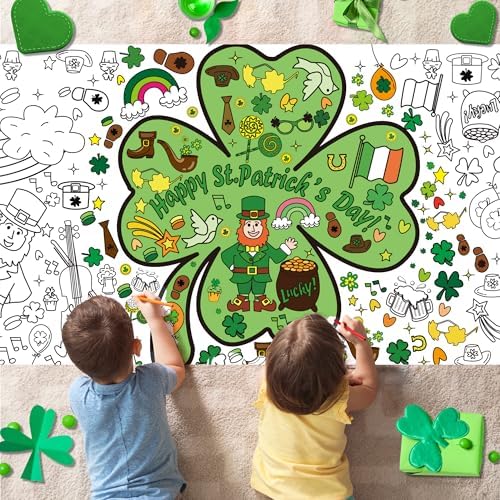
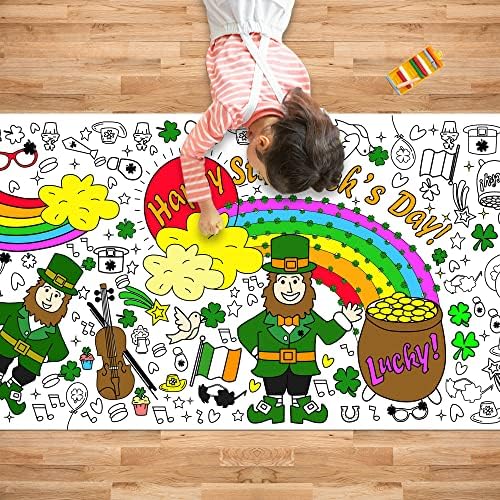
Printed across the sheet are leprechauns, lucky four-leaf clovers, rainbows and pots of gold, along with smaller Irish trinkets tucked between them. The drawings give a starting point to a child who freezes in front of blank paper, and they set up games on their own: find every clover, color only the gold, invent where the treasure went. Classrooms can run it as a group station.
Rolling It Up Afterward
Cleanup is one motion. Roll the sheet from one end and the crayon shavings, the stray dots of paint and the whole afternoon go with it. Families who want to keep the drawings can store the roll flat instead of throwing it out, since the finished sheet is the record of who sat where and what they made. Nobody scrubs a tabletop afterward.