Eight Designs, Three Each
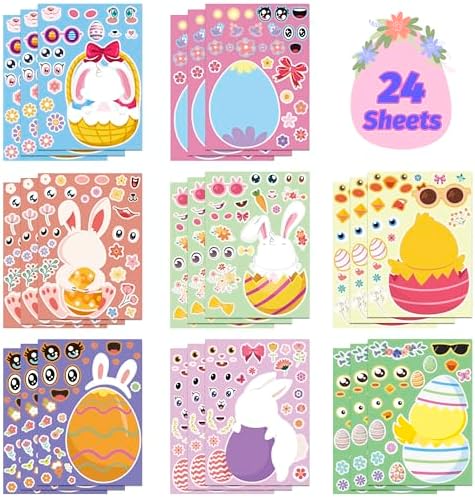
Three copies of every design is the number that keeps a table calm. Two children can want the same bunny and both get one, and a classroom can split the sheets between groups without counting out single stickers. Twenty-four sheets also mean the set does not end after one sitting, so what starts in a basket on Sunday morning still has pieces left for the week after.
Choosing Every Face
Each sheet breaks a character into parts, with a range of expressions to choose from. A child picks the body, then decides whether the lamb is surprised or half asleep, and the same outline becomes a different animal depending on which eyes go on. Carrots, flowers and small baskets fill the space around it. The choosing is most of the activity; the sticking takes a minute.
Sheets For Small Hands
At 8.26 by 5.9 inches a sheet lies flat in a lap or on a car tray without folding over the edges. It is big enough that a small hand can pick a sticker off the backing alone, which is the difference between a quiet activity and one that needs an adult on every peel. Several sheets stack into a basket beside the chocolate without taking the space.
Eggs, Envelopes And Windows
The stickers are not limited to paper. They go onto hard-boiled eggs, onto the outside of a basket to mark whose is whose, onto cards and invitations, notebooks, scrapbook pages, envelopes, a bedroom window, the door of a refrigerator, a wrapped gift box. Table settings at a family lunch get a name and a rabbit at each place. Adults tend to use them for wrapping.