Six Colors Instead of Two
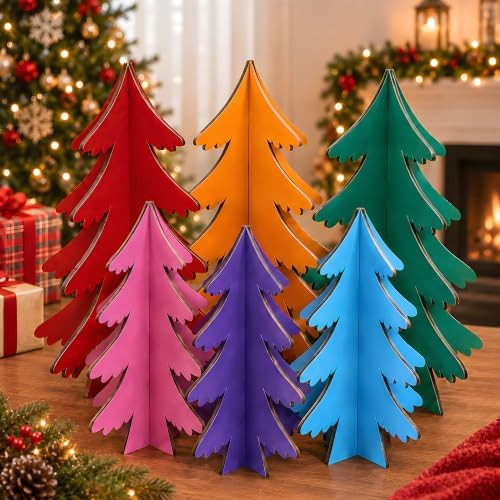
Red and green is the default, and this set deliberately goes past it: orange, pink, purple and blue sit alongside the traditional pair. Grouped together the colors read as a deliberate choice rather than a mismatch, and a few of them can be pulled out to suit a room already decorated in one shade. Children tend to sort them by color themselves.
Two Heights, Layered Look
Mixing the larger and smaller trees is what gives a flat surface depth. Taller pieces go at the back of a group with the small ones in front, so a mantel or shelf gets a skyline instead of a single row. The freestanding three dimensional shape also means the display can be viewed from any side, which matters on a dining table.
Slot Into the Base
Each tree assembles by interlocking with its own base, so there is no glue, no screws and nothing to balance against a wall. Once inserted the wood stands steady on any flat surface, including a surface that gets knocked by passing traffic. Taking the set apart again is the same motion in reverse, which keeps it practical for everyday decorating.
Desks, Consoles and Office Shelves
The pieces are sized for places a full decoration will not go: a coffee table, a cabinet shelf, an entryway console, a bookcase or an office desk where personal items have to stay small. Teams often put a few on a shared counter for the season. They pair with garlands, ornaments and lights already in place rather than competing with them.